ActiveVision

An Exam for Active Observers

Jiarui Zhang*, Muzi Tao*, Shangshang Wang*, Ollie Liu, Xuezhe Ma, Willie Neiswanger
University of Southern California · *Equal contribution

ActiveVision tests whether models can solve visual problems that require
iterative observation, rather than a single glance. Every scene is generated by a
deterministic program then re-rendered photorealistically while preserving the structure.

Each example is one static image. The video clips show the solving process.
Humans
96.1%
Top model
10.6%
Gap

Benchmark results

Leaderboard

Tool-using agents
#AgentSetup ScoreAccuracyCost / item
1 Fable 5Claude Code xhigh + tools 43 / 85 50.6%
$7.63
2 GPT-5.5Codex xhigh + tools 32 / 85 37.6%
$2.74
3 Opus 4.8Claude Code xhigh + tools 21 / 85 24.7%
$4.23

The tasks

How each task is solved

Distributed Scanning

count evidence across the whole image 5 tasks
Connected Component Counting
Count every separate ink blob across the field.
top model 1/5human 5/5
Region Counting
Count the regions the lines carve the plane into.
top model 2/5human 5/5
Bounded Face Counting
Count every fully-enclosed face in the drawing.
top model 1/5human 5/5
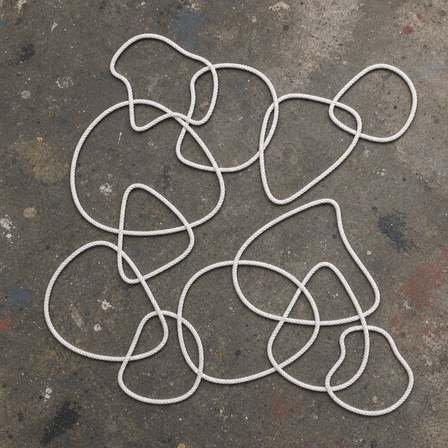
Tangled Loop Counting
Count the distinct closed loops in the tangle.
top model 0/5human 5/5
Singleton Shape Counting
Find the shapes that appear exactly once.
top model 1/5human 3.5/5

Sequential Traversal

follow one path or order through the scene 5 tasks
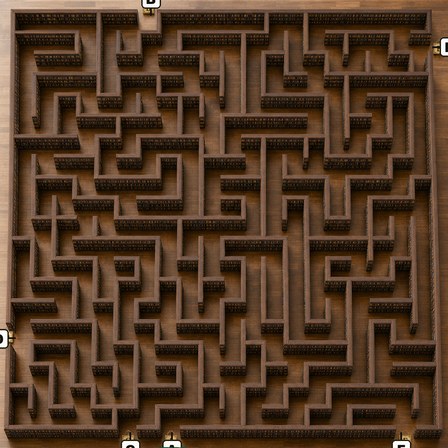
Maze Path Tracing
Find the one open path between the marked gates.
top model 1/5human 5/5
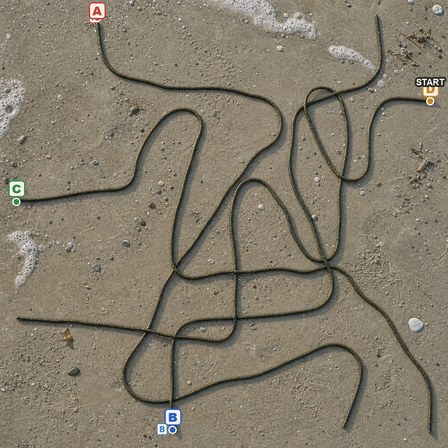
Line Intersection Sequencing
Trace one strand through every crossing, in order.
top model 0/5human 5/5
Arrow Chain Following
Hop arrow to arrow until you reach the final marker.
top model 2/5human 5/5
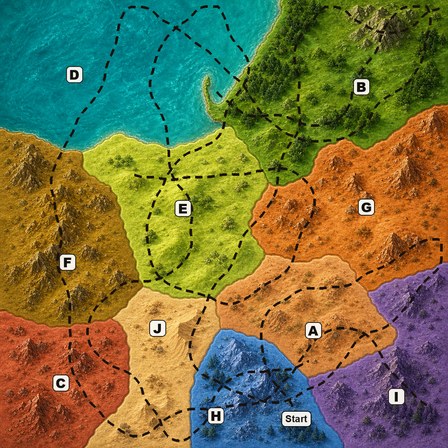
Color Zone Sequencing
Follow the curve through the colored zones, in order.
top model 0/5human 5/5
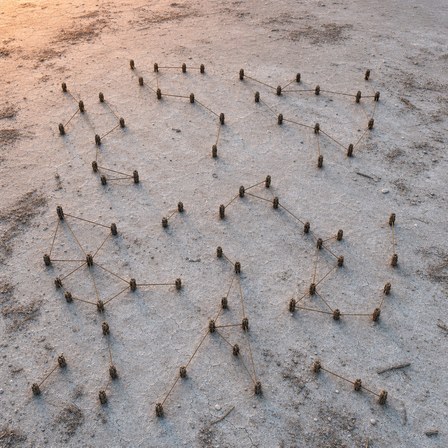
Traversal Point Ordering
Visit the points in the required reading order.
top model 0/5human 5/5

Visual Attribute Transfer

compare a property across regions or paired panels 7 tasks
Constellation Match Counting
Count the fields matching the template constellation.
top model 3/5human 5/5
Silhouette Match Counting
Count the silhouettes matching the target contour.
top model 1/5human 5/5
Stroke Match Counting
Count the strokes matching the reference gesture.
top model 1/5human 4.5/5
Contour Difference Spotting
Find the single cell whose contour was altered.
top model 1/5human 5/5
Field Difference Spotting
Spot the one cell that changed across the field.
top model 0/5human 4.5/5
Signal Difference Spotting
Find the lone difference hidden in the field.
top model 1/5human 5/5
Stroke Difference Spotting
Find the stroke that doesn't match the rest.
top model 1/5human 5/5

Dataset construction

Photorealistic with geometry preserved

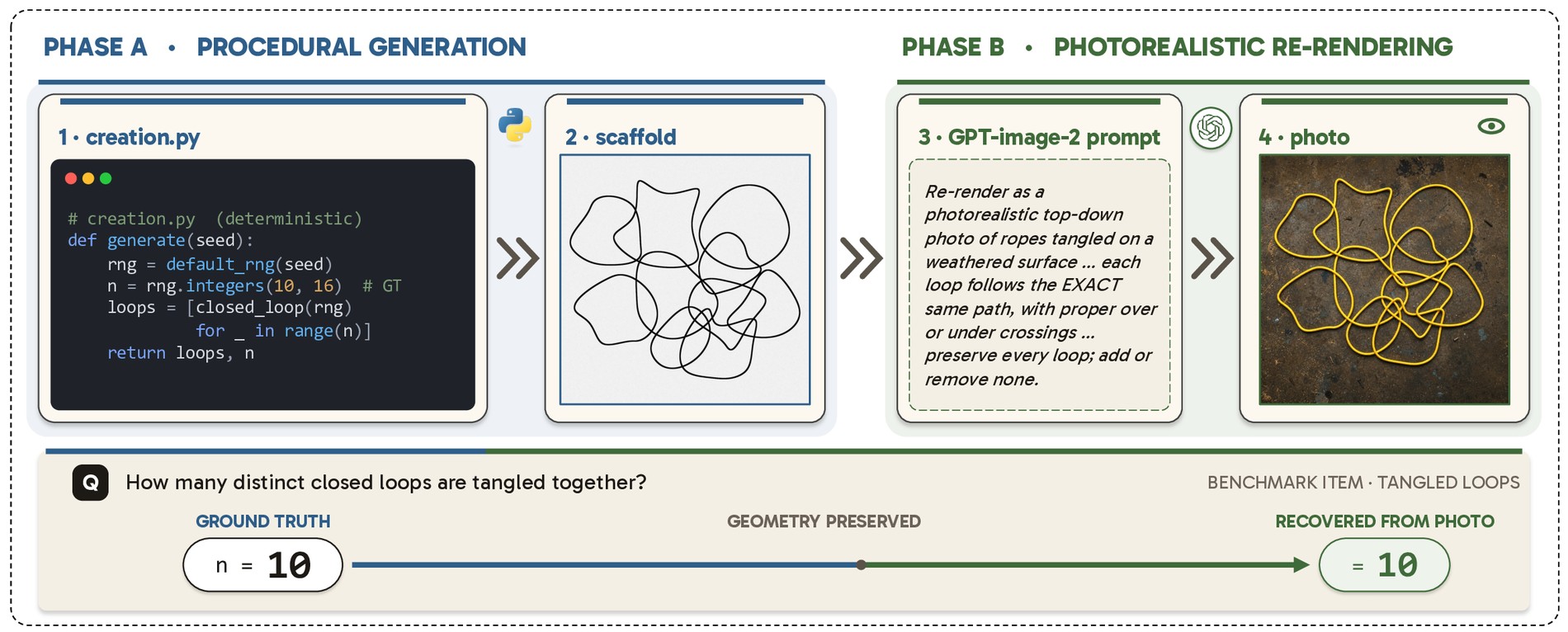
Every puzzle is generated by a program, so its answer is known exactly — then re-rendered as a photorealistic scene that keeps the geometry intact. No human annotation anywhere in the loop.

Four-stage generation pipeline: deterministic Python generator, scaffold, GPT-image prompt, and photorealistic benchmark image.

Evaluate

Put your model on the board